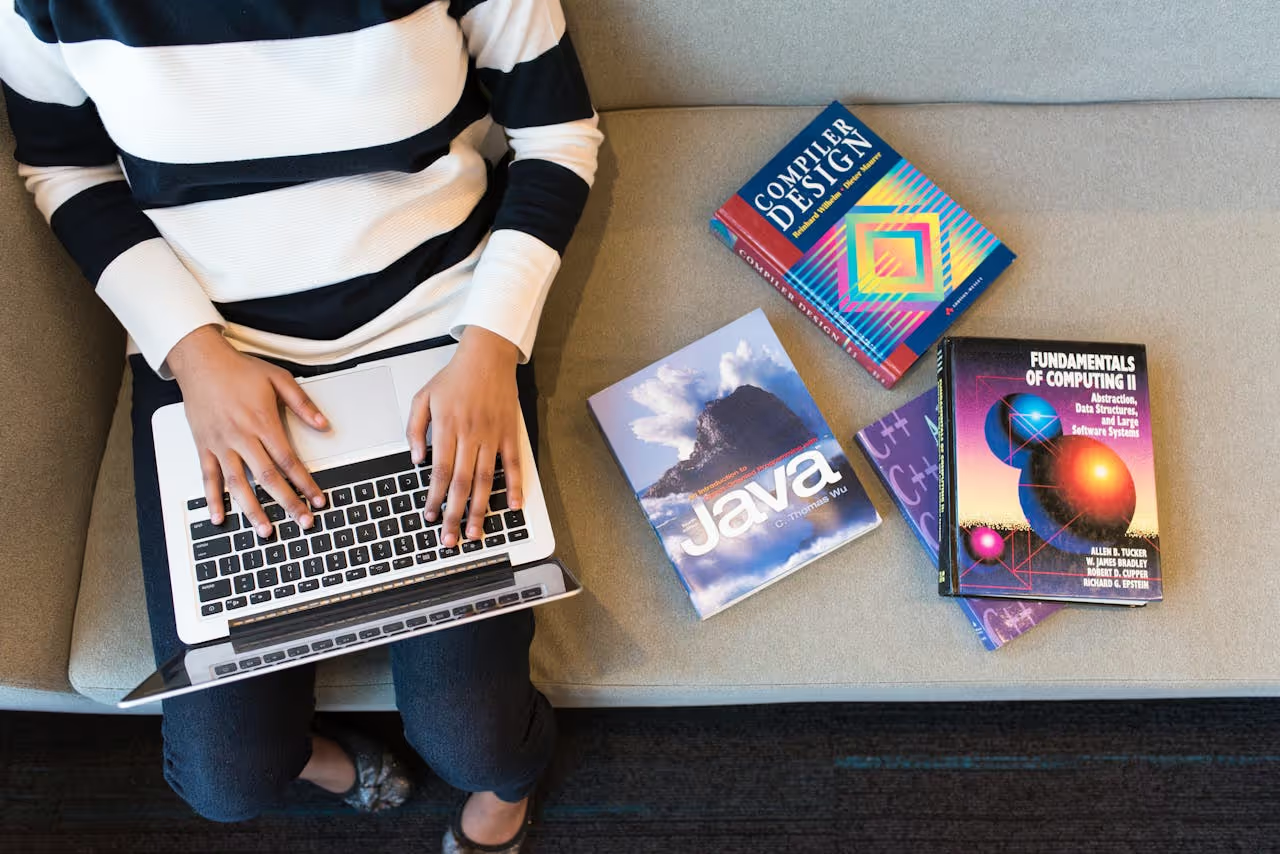
In an increasingly digital world, the ability to understand and create with code has become a superpower. Whether you're looking to launch a new career, build your own app, automate tedious tasks, or simply sharpen your problem-solving skills, learning programming opens up a universe of possibilities. It might seem like a daunting challenge at first, with a myriad of languages, tools, and concepts to grasp, but with the right approach and a solid roadmap, anyone can become a proficient coder.
This comprehensive guide is designed to demystify the learning process, providing you with a structured path from absolute beginner to confident programmer. We'll cover everything from choosing your first language to mastering fundamental concepts and finding the best resources to support your journey.
Why Learn Programming?
Before diving into the 'how,' it's worth reflecting on the 'why.' The motivations for learning programming are as diverse as the individuals who embark on this journey:
Career Opportunities: The tech industry continues to boom, offering high-demand roles in web development, data science, mobile app development, cybersecurity, and more.
Problem-Solving: Programming trains your mind to break down complex problems into smaller, manageable steps, a valuable skill in any aspect of life.
Creativity: Code is a powerful tool for creation, allowing you to bring your ideas to life, whether it's a website, a game, or a useful utility.
Automation: Automate repetitive tasks, saving time and increasing efficiency in your personal and professional life.
Choose Your First Programming Language Wisely
The first step often feels the hardest: picking a language. While there's no single "best" language, some are more beginner-friendly and versatile than others. Consider your goals when making your choice:
Python
Best for: Beginners, web development (backend), data science, AI/machine learning, scripting.
Python is often recommended for newcomers due to its clear, readable syntax that closely resembles English. It has a vast ecosystem of libraries and frameworks, making it incredibly versatile.
JavaScript
Best for: Web development (frontend and backend with Node.js), mobile apps (React Native).
If you're interested in building interactive websites, JavaScript is essential. It's the language of the web browser and can also be used for server-side programming, making it a powerful full-stack option.
HTML/CSS
Best for: Web page structure and styling.
While not strictly programming languages, HTML (Hypertext Markup Language) and CSS (Cascading Style Sheets) are foundational for web development. HTML structures the content of a webpage, and CSS styles it. They are excellent starting points for understanding how web pages are built.
Master the Fundamentals
Regardless of the language you choose, certain core programming concepts are universal. Focus on understanding these deeply:
Variables and Data Types: How to store and manipulate information (e.g., numbers, text, true/false values).
Operators: Performing calculations and comparisons (e.g., +, -, ==, <).
Control Flow: Directing the execution of your code based on conditions (
if/elsestatements) and repeating actions (forandwhileloops).Functions: Reusable blocks of code that perform specific tasks.
Data Structures: Ways to organize and store data efficiently (e.g., lists, arrays, dictionaries, objects).
Basic Algorithms: Step-by-step procedures for solving problems (e.g., sorting, searching).
Hands-On Learning is Key
Reading about programming isn't enough; you need to do it. Active learning is crucial:
Write Code Daily: Even short coding sessions can reinforce concepts and build muscle memory.
Solve Coding Challenges: Websites like LeetCode, HackerRank, and Codewars offer problems of varying difficulty to test your skills.
Build Small Projects: Apply what you learn by creating simple applications like a to-do list, a calculator, a basic game, or a personal website. This solidifies understanding and provides a sense of accomplishment.
Debug Your Own Code: Errors are inevitable. Learning to identify, understand, and fix bugs is a fundamental programming skill.
Leverage Learning Resources
The internet is brimming with resources to aid your learning journey:
Online Courses: Platforms like Coursera, Udemy, edX, and Udacity offer structured courses, often with assignments and projects.
Interactive Platforms: Websites like Codecademy, freeCodeCamp, and The Odin Project provide hands-on coding environments and guided curricula.
Documentation and Tutorials: Official language documentation (e.g., Python Docs, MDN Web Docs for JavaScript) and countless blogs offer in-depth explanations and how-to guides.
Books: For a deeper dive into specific topics or foundational computer science, books remain an invaluable resource.
YouTube Channels: Many educators offer free video tutorials on a wide range of programming subjects.
Embrace the Community & Continuous Learning
You don't have to learn in isolation:
Join Online Communities: Websites like Stack Overflow, Reddit communities (e.g.,
r/learnprogramming), and Discord servers are great places to ask questions, share knowledge, and connect with other learners.Attend Meetups and Workshops: Local tech events can provide networking opportunities and practical learning experiences.
Contribute to Open Source: As you gain confidence, contributing to open-source projects is an excellent way to gain real-world experience and collaborate.
Stay Updated: The tech landscape evolves rapidly. Make continuous learning a habit by following industry news, blogs, and new technologies.
Cultivate a Coder's Mindset
Beyond the technical skills, developing the right mindset is crucial:
Patience and Persistence: Learning to code is a marathon, not a sprint. You will encounter challenges and frustrations.
Problem-Solving: Approach problems systematically, breaking them down and thinking logically.
Don't Be Afraid to Fail: Errors and bugs are part of the learning process. See them as opportunities to learn.
Curiosity: Always ask 'why' and 'how.' A curious mind drives deeper understanding.
Conclusion
Learning programming is an incredibly rewarding journey that can transform your career and expand your intellectual horizons. It demands dedication and perseverance, but the sense of accomplishment you'll gain from building something with your own code is unparalleled. Start by choosing a beginner-friendly language, focus on mastering the core concepts through hands-on practice, and make full use of the abundant resources and supportive communities available. Remember that every expert was once a beginner. Take that first step, embrace the challenges, and enjoy the exciting path to becoming a proficient programmer.